
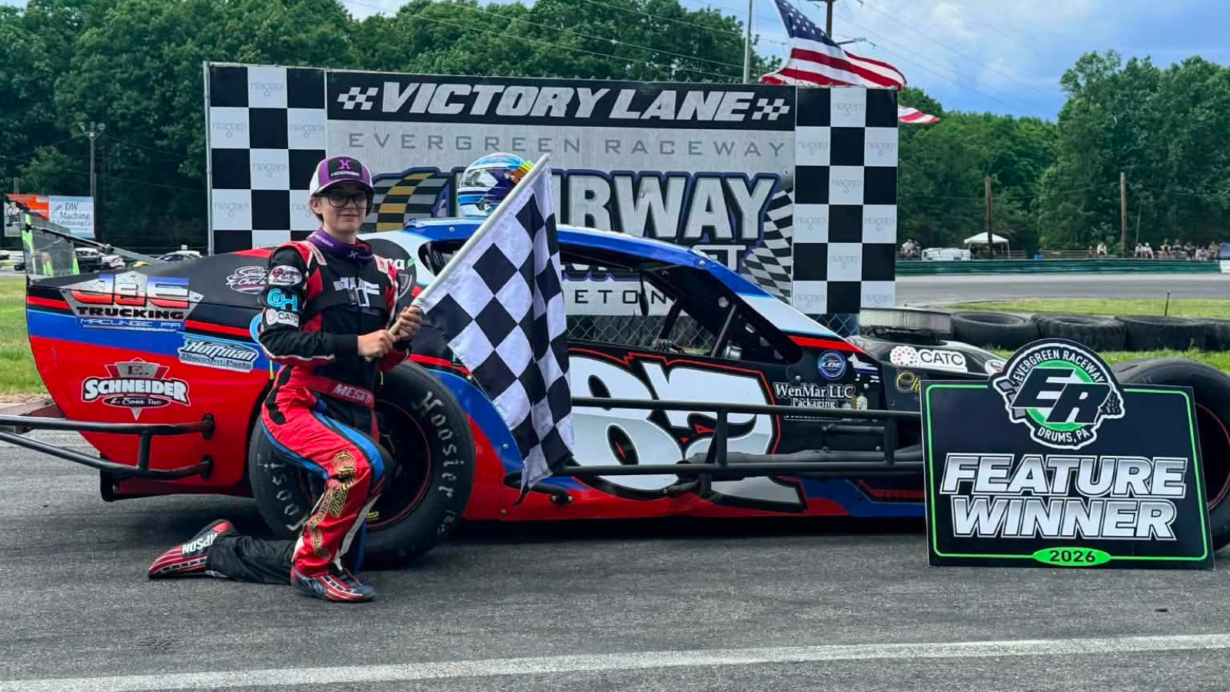

Watching a 16-year-old strap into a race car is something special, especially when she’s your cousin. After making her way up the ranks over the past few years, she’s wrapping up her first season racing a 602 Modified, developing the skills every young driver must learn: how to control the car, manage nerves, block out distractions, find speed, develop race craft, earn the respect of her competitors, and put herself in position to compete for wins.
As I watch her, I can’t help but think back to something I was involved in more than 20 years ago. In some ways, it feels like I’m seeing the impact of that work—being part of a small team that helped create opportunities for women to find their place in the sport.
Starting Line
In late 2003, I got involved with NASCAR’s Drive for Diversity program. It started as a big idea—create chances for minority and female drivers to compete, build their skills, and chase careers in NASCAR. But turning that vision into a real racing program wasn’t straightforward.
We had to find drivers, recruit teams, get corporate partners on board, align with the sanctioning body, and handle countless details before those first five drivers could hit the track in the inaugural 2004 season. I was part of that process, from the lead-up to the launch all the way through that first season. After that, I stepped back.
Being on the ground floor and launching a key program in the motorsports industry is among the best things I’ve ever been part of, and I’ve enjoyed watching the program grow in the years since. The program created opportunities for minority and female drivers and pit crew members in the sport and eventually opened doors for the likes of Kyle Larson, Bubba Wallace, and Daniel Suárez.
The Drive for Diversity program’s goal extended beyond putting minorities and females on the track and in the pits. It started a ripple effect: letting others see themselves in the sport. Visibility can spark interest. And when interest grows, participation follows.
Full Circle
This all brings me back to my cousin. She’s not a product of Drive for Diversity, and I played no role in getting her into racing. That’s not really the point. What matters is that she’s entering a racing culture that looks very different from the one I knew when I was helping launch that program.
She’s a young woman who sees racing as something she can do. She jumps into a car, hits the track, and competes week in and week out.
That’s what makes watching her so meaningful.
With continued hard work and a little luck along the way, maybe the next breakout woman racer will be Sarabeth Mesko (you may have already read about her).