



Early in my career, I volunteered regularly with a church. One thing that struck me was the way the pastor answered the question of why he loved his job. His response: “It sets me free to do what I am.” That line has really shaped my ideal of living in your strengths.
If you’re a basketball fan, chances are you’ve seen that sweet sky hook of NBA Hall of Famer Kareem Abdul-Jabbar.
In the book, “Wooden: A Lifetime of Observations and Reflections On and Off the Court,” Abdul-Jabbar’s college coach at UCLA, John Wooden, recalled how upset his all-star player was when the NCAA outlawed the slam dunk after the 1966-67 season. But Wooden assured him, “This will make you a better player. You’ll have to work harder developing your hook shot, the little short shots off the boards, and the shots around the basket. There is no way this will do anything but make you a much better ballplayer.”
While heeding Wooden’s advice, Abdul-Jabbar worked to develop different areas of his game, including that hook shot. In a New York Times piece from 1988, Wooden recalled that in order to “prevent players from blocking the hook from behind,” he encouraged Abdul-Jabbar to “abandon the sweeping motion, … instead keeping the ball in close to the body and shooting a straighter trajectory.”
Abdul-Jabbar had found his shot! He discovered his strength.
As John Nielsen wrote in that Times article, that sky hook “terrorized Abdul-Jabbar’s [NBA] opponents for the better part of 19 years” and helped Abdul-Jabbar to six MVP awards, five championship rings and, at one point, virtually all of the league’s career scoring records. To this day, Abdul-Jabbar’s hook makes the highlight reel of all things good about the NBA.
Become Strength-Based
I really like this Abdul-Jabbar story because it’s a story of discovery and presents a great lesson for anyone trying to find their best fit on a career path. How great would it be if you discovered your strength, your own sky hook, so to speak?
A leading source on strengths is Gallup, which proudly proclaims that the organization “created the science of strengths.” A great product of the group’s 50-plus years of research is the popular CliftonStrengthsFinder assessment.
Before we get into the assessment, let’s unpack some of Gallup’s research. The biggest takeaway is that everyone has strengths — the “unique combinations of talents, knowledge, skills and practice that help them do what they do best every day.”
Gallup analysis reveals that “people who use their strengths every day are three times more likely to report having an excellent quality of life, six times more likely to be encouraged at work, 8% more productive and 15% less likely to quit their jobs.”
People who use their strengths in their vocation tend to be more productive because the activities and demands of their job are intrinsically rewarding. As a result, they work harder and smarter.
As we see in this research, there’s obviously value in working in your strengths. This leads to an important question. What are your strengths?
De-Emphasize Weaknesses
Before we move forward in discussing strengths, let’s address weaknesses. Forget about your weaknesses. Gallup’s research found that “no matter how hard you try, you really can’t improve your weaknesses. You’re wasting time and energy trying to do so.”
Unfortunately, though, “what’s your greatest weakness?” continues to be a question asked in far too many job interviews. No matter how much you embrace living in your strengths, you may be asked to discuss your weaknesses.
Liz Ryan, founder of Human Workplace, gives a great recommendation on how to turn this question around: “Weaknesses? I used to think I had weaknesses and I used to worry about the parts of me that I didn’t feel comfortable with. Gradually it dawned on me that I’m perfectly suited to the things I do well, like [graphic design and art direction] and that there are other things I shouldn’t be doing because I don’t enjoy them and I’m no good at them – like [Excel spreadsheets] for example. What about you?”
The best thing you can do is discover your strengths, then find a role that allows you to exploit them.
Discover Your Strengths
Throughout my career, I have always taken a great interest in internship programs. Having spent a career in the sports industry, there was never a shortage of individuals interested in interning with the organization I was with. This article is largely written with these students in mind.
It is commonly understood by hiring managers that a college student may not be able to gain a significant amount of relevant work experience outside of the classroom before graduation. However, one of the best ways to overcome that and get a head start in your career is to discover, embrace and develop strengths that are innate within you.
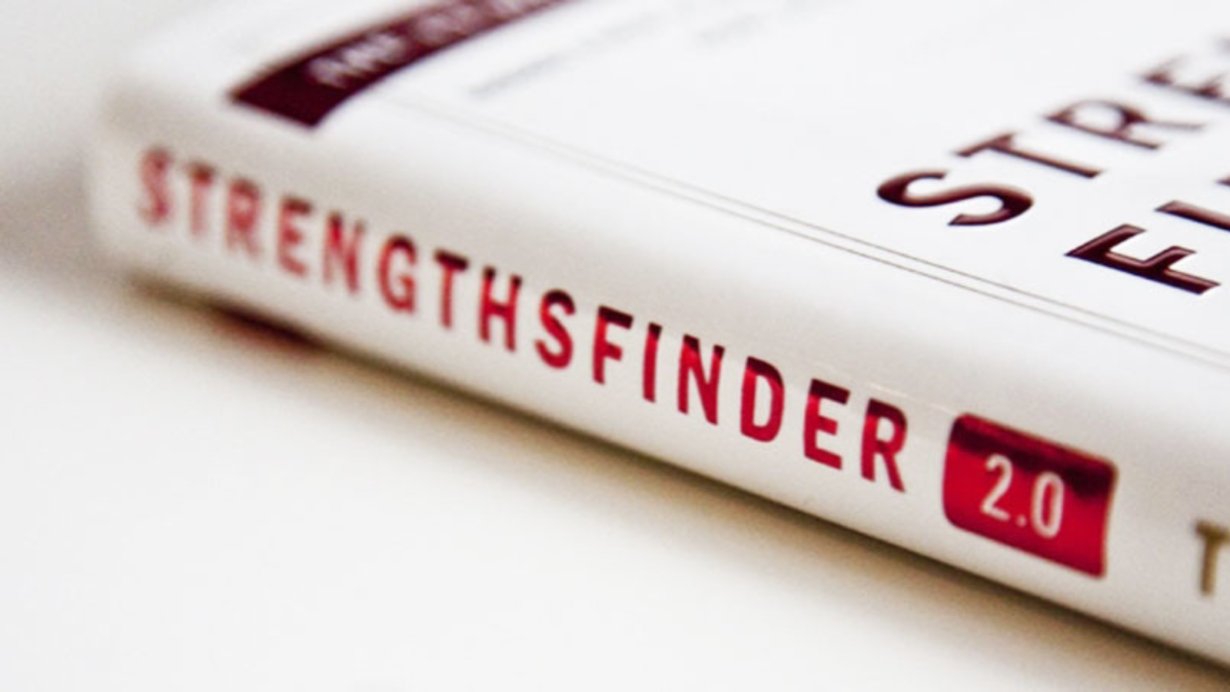
Gallup’s Clifton Strength Finder 2.0 assessment is a great tool to discover those strengths. In its technical report, Gallup notes that the assessment’s “intended purpose is to facilitate personal development and growth. It is intended and used as a springboard for discussion with managers, friends, colleagues and advisers, and as a tool for self-awareness.”
In over three decades of study, Gallup identified over 400 talents; a talent being defined as natural and recurring ways of thought, feeling or behavior. Then, Gallup grouped similar talents into a Signature Strength Theme, ultimately identifying 34 unique Strengths in the Clifton Strengths Finder assessment. These themes are based on the analysis of millions of people in the Gallup database. Upon completing the assessment, you will discover your top five Signature Strengths Themes.
The Clifton Strengths Finder assessment has served over four million people worldwide. It was originally pioneered by Gallup employees Marcus Buckingham and Donald Clifton, and more recently revised by Gallup’s Tom Rath. You can find Rath’s StrengthsFinder 2.0 book at your local bookstore or purchase the assessment tool online.
Embrace Your Strengths
After you have taken the assessment, take a good, long look at how each of your strengths resonates with you. Do these strengths accurately describe you?
Reflect on your past experiences, whether with jobs, volunteer work or class projects, and look for areas in which your strengths were evident. Were there times when you already worked confidently and effectively in these strengths? Also consider how your five strengths relate to one another in the scope of a large project or a big goal. Think of these strengths as a package deal.
What I found most helpful in my own discovery process was that some close friends of mine had also recently taken the test. In looking at my friends’ results, I became a firm believer in my own results. When I saw how closely Matt’s strengths lined up with the experiences I had with Matt (to name just one of those friends), it became that much easier to embrace the results of my own assessment. Having my friends then affirm for me the strength set that I have was very beneficial as well.
So, if you’re only now considering taking this assessment, then I recommend finding a good friend, classmate, business associate or colleague and taking the assessment together. Or, find someone you’re close to who has already taken the assessment and compare experiences and encourage one another in your respective strength sets.
Develop Your Strengths
There are many schools of thought when it comes to putting your strengths into action and crafting a personal development plan. But the key is to be intentional in developing your strengths. Consider the difference between talents and strengths. A talent can be considered a diamond in the rough, while a strength is that diamond that has been buffed out to a brilliant shine.
The best way for people to grow and develop is to identify how they most naturally think, feel and behave — their talents — then build on those talents to create strengths, or the ability to consistently provide near-perfect performance.
If you want to walk in your strengths, you can simply do that one step at a time. How you move forward in your strengths may take a lot of consideration and study, or it could be very obvious. For me, it was very obvious.
Long before I took the assessment, I had a desire to bring ideas to life, whether as a business owner, project manager, or in some other capacity. My strength mix of Responsibility, Strategic, Futuristic, Learner and Focus did nothing but reinforce that desire. So I moved forward with vision casting and business planning. To this day, I seem to thrive mentally and emotionally when I’m in this mode.
For college students, particularly, there are a plethora of opportunities to hone their strengths. Let’s unpack five areas.
- Job Experience: Pursue jobs that align with your strengths, and be intentional about working for people who would make great mentors in these areas.
- Internships: The better fit you are for an internship, the more productive an intern you will be. Make your internship count for more than just the required credit hours. Find an opportunity to work on your strength set.
- Volunteer: Get involved with local non-profits. Often, these organizations will have small steering committees around projects or events. You’ll very likely find the chance to work on your strengths.
- Class Projects: You may often have discretion in the projects you do. Develop your strengths in the individual projects you decide to do, or the role you play in group projects.
- Research: Spend time learning about careers and vocations that are a good fit for your strengths set. This research could be in the form of books, magazines, webinars, etc.
- Consultation: Find a mentor who can help in your development, seek conversations with individuals working in related areas, and lean on your friends for guidance as you develop towards your goals.
That list, honestly, is seemingly a no-brainer. However, the ebb and flow of life has a way of setting traps and digging ruts. It’s important that you are intentional in developing your strengths. As the Gallup research shows, your quality of life may depend on it.
Communicate Your Strengths
If you’re still in college or just entering full-time career mode, consider working your CliftonStrengthFinder results into your resume. This may be the most important thing you do with your results.
You’ll accomplish a few things in showcasing your strengths. For starters, it’s a sign that you are already intentional about your own strengths development. Secondly, it will appeal to a growing number of hiring managers as the workforce continues to move toward a strength-based culture. Lastly, and perhaps most importantly, the organization you end up working for has a head start on maximizing your time and theirs.